Alexandre Legrand: Navigating the Spatial Web and the Future of Digital Cartography

The Evolution of the Digital Map

In the rapidly expanding landscape of the spatial web, the concept of a ‘map’—or ‘carte’—has undergone a radical transformation. No longer confined to the flat, two-dimensional surfaces of traditional cartography or even the interactive but static tiles of early web mapping, the modern digital map is a living, breathing entity. For Alexandre Legrand, the ‘carte’ represents the foundational layer of our digital future, a synthesis of geographic precision and generative intelligence that allows us to navigate not just space, but information and history itself.

As we delve into the work of Legrand, we see a recurring theme: the digitisation of reality is not merely a technical exercise in scanning. It is a creative act of reconstruction. By leveraging advanced AI tools alongside 3D spatial data, Legrand creates environments that are both hyper-realistic and narratively rich. This approach bridges the gap between raw data and human experience, turning a simple coordinate into a rich, immersive world.

From Static Coordinates to Generative Environments

The transition from traditional GIS (Geographic Information Systems) to AI-enhanced 3D environments marks a significant shift in how we perceive digital space. In the past, a map was a tool for orientation; today, under the guidance of visionaries like Legrand, it becomes a platform for simulation. The ‘carte’ is no longer just about where things are, but about how they feel, how they move, and how they evolve over time.

By integrating generative AI into the 3D mapping pipeline, Legrand is able to fill the gaps that traditional photogrammetry often leaves behind. Where a camera might miss a detail in a shadowed alleyway or the complex geometry of a historical monument, AI can infer and reconstruct with startling accuracy. This process, often referred to as ‘hallucinating’ detail, is grounded in the architectural and environmental logic of the surrounding data, ensuring that the final output is both aesthetically pleasing and spatially coherent.

The Role of AI in Spatial Reconstruction

At the heart of Alexandre Legrand’s methodology is the use of Neural Radiance Fields (NeRFs) and Gaussian Splatting. These technologies represent the cutting edge of spatial AI, allowing for the creation of high-fidelity 3D scenes from a limited set of 2D images. Unlike traditional polygonal modelling, which can be labour-intensive and often lacks the nuance of real-world textures, NeRFs capture the way light interacts with surfaces, providing a level of realism that was previously unattainable.

For the ‘carte’ project, this means that digital maps can now include complex lighting, atmospheric effects, and materials that react dynamically to the user’s perspective. This level of detail is crucial for applications ranging from urban planning and architectural visualisation to the creation of digital twins for heritage sites. By digitising the past with such precision, Legrand ensures that our cultural ‘map’ remains intact for future generations, preserved in a format that is as interactive as it is accurate.

Integrating NERFs and Photogrammetry

The synergy between traditional photogrammetry and modern AI-driven reconstruction is where the magic happens. Photogrammetry provides the structural skeletal data—the hard measurements and spatial relationships—while AI provides the ‘flesh’ and the ‘soul’ of the environment. Legrand’s work often involves taking thousands of drone-captured images and processing them through a hybrid pipeline that optimises for both performance and visual fidelity.

  • Precision Mapping: Utilising LiDAR and high-resolution photography to establish a ground-truth model.
  • AI Enhancement: Applying generative models to upscale textures and reconstruct occluded geometries.
  • Real-time Rendering: Optimising the final 3D assets for use in engines like Unreal Engine 5, allowing for seamless navigation of the digital map.
  • Semantic Layering: Adding metadata to 3D objects, allowing the ‘carte’ to be searchable and interactive.

The Narrative Potential of 3D Cartography

Beyond the technical specifications, Alexandre Legrand views the digital map as a storytelling device. Every ‘carte’ tells a story of human habitation, environmental change, or historical conquest. In his projects reimagining figures like Alexander the Great or Vincent van Gogh, the map serves as the stage upon which these historical narratives are re-enacted. By placing the viewer inside a 3D reconstruction of a post-impressionist landscape or an ancient city, Legrand collapses the distance between the observer and the subject.

This narrative approach to mapping is particularly evident in the digital twin projects of Île de la Réunion. Here, the map is not just a tool for navigation, but a record of the island’s unique ecology and topography. It allows users to explore inaccessible terrains and understand the delicate balance of the environment through an immersive lens. This is the future of the ‘carte’: a multi-layered experience that combines geography, history, and art into a single, cohesive digital environment.

The Intersection of Human Intuition and Machine Precision

One of the most underrated skills in the modern AI-3D pipeline is digital curiosity. Legrand emphasises that while the tools are becoming more automated, the creative direction remains a deeply human endeavour. Knowing which AI model to apply, how to tweak the parameters of a 3D scan, and how to compose a scene for maximum emotional impact requires an intuitive understanding of both technology and aesthetics. The ‘carte’ is a reflection of this balance, a testament to the fact that the most effective digital worlds are those built with both data and heart.

As we move further into the era of the Metaverse and the Spatial Web, the work of Alexandre Legrand provides a blueprint for how we should approach the digitisation of our world. It is not enough to simply record; we must interpret, enhance, and reimagine. The digital map of tomorrow will be a collaborative effort between human creativity and machine intelligence, offering us new ways to see, understand, and interact with the world around us.

Mapping the Future of Digital Twins

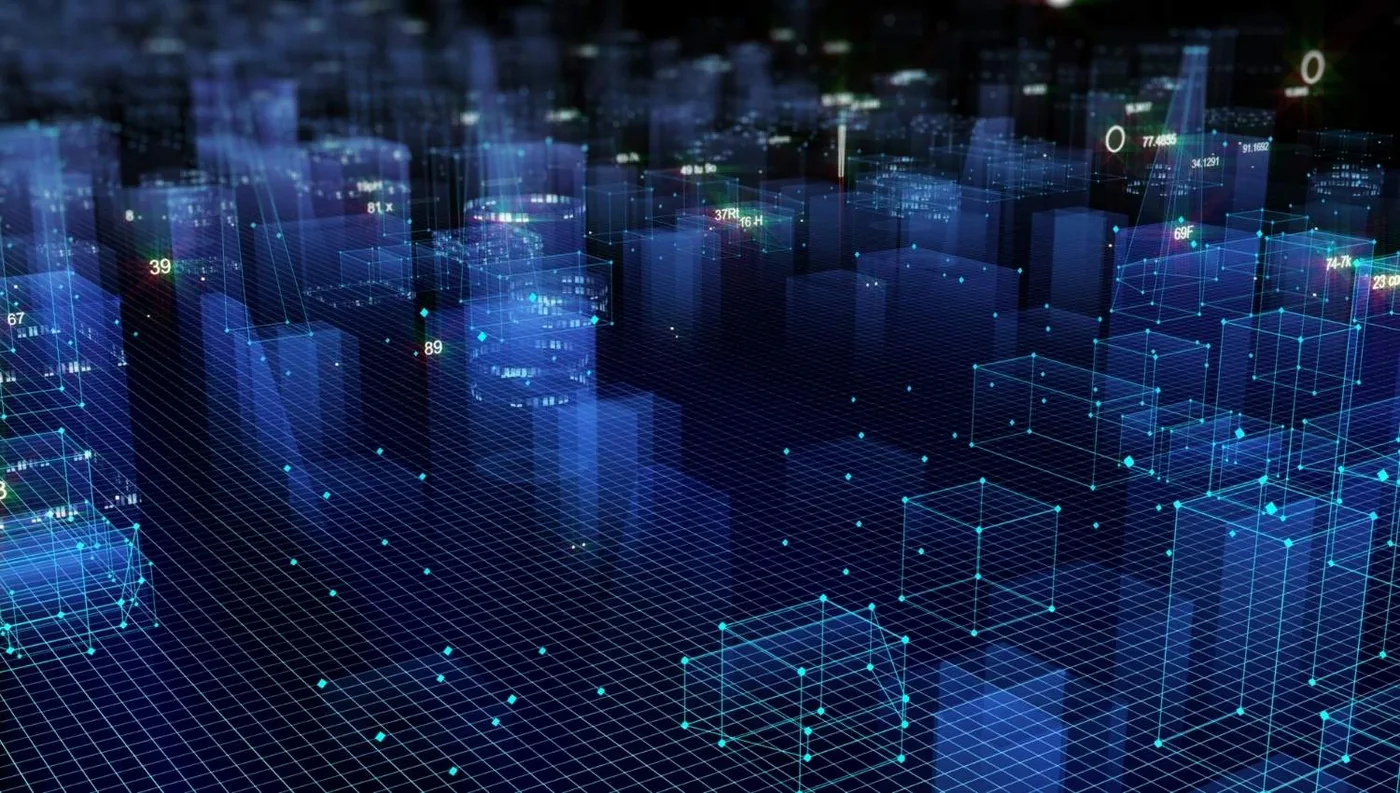
The practical applications of Legrand’s ‘carte’ extend far beyond the realm of art and heritage. In the context of the modern smart city, a 3D, AI-enhanced map serves as the operating system for urban life. From simulating traffic patterns and energy consumption to providing first responders with high-fidelity layouts of complex buildings, the digital twin is an essential tool for 21st-century governance. Legrand’s contribution to this field lies in making these maps accessible and intuitive, ensuring that the vast amounts of data generated by our cities are presented in a way that is useful for the people who live in them.

By focusing on the user experience of the digital map, Legrand ensures that the transition to a spatial-first internet is inclusive and engaging. Whether it is through a VR headset or a simple mobile interface, the ‘carte’ becomes a window into a world where information is no longer something we read, but something we inhabit. This shift represents the ultimate goal of the 3DSRC mission: to explore the future of digital design through the lens of AI and 3D technology, creating a world that is as rich and complex as our own.

© 2026 3DSRC. All rights reserved.